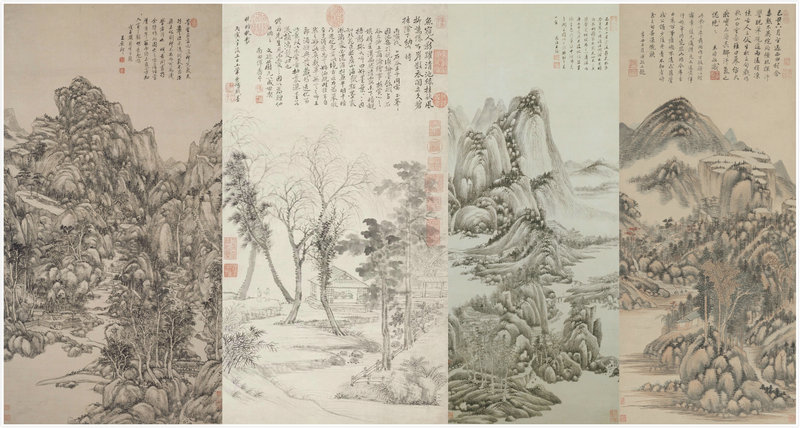
Four Wangs
Introduction
The term "Four Wangs" refers to four prominent Chinese landscape painters of the early Qing Dynasty: Wang Shimin, Wang Jian, Wang Hui, and Wang Yuanqi. These artists, who all shared the same surname, dominated the painting circles during this period and were highly regarded for their contributions to the art world. Collectively, they embodied the literati styles of southern China, focusing on the imitation of ancient and classical techniques. Their works were characterized by their intricate techniques, elegant styles, and ability to capture the timeless beauty of landscapes. The "Four Wangs" were not only connected through their artistry but also shared educational or familial ties, which further strengthened their influence within the art community.
Historical Background
The early Qing Dynasty, which spanned from 1644 to 1911, was a period of cultural and artistic flourishing in China. During this era, the "Four Wangs" emerged as leading figures in the art world, shaping the development of Chinese landscape painting.
The "Four Wangs" drew inspiration from earlier masters, such as Huang Gongwang and Ni Zan of the Yuan Dynasty (1271-1368) , and Dong Qichang of the Ming Dynasty (1368-1644). By studying these predecessors, they developed their unique styles, which combined traditional techniques with their personal artistic expressions. Despite their ties to the court, the legacy of the "Four Wangs" in landscape painting extended beyond their imperial associations, leaving a lasting impact on the art form and inspiring future generations of artists.
Artistic Contributions
Calligraphy
While primarily known for their painting, the "Four Wangs" also contributed to the art of calligraphy. Their calligraphic works reflected the same dedication to classical styles and techniques that characterized their paintings. Emphasizing grace and precision, they incorporated literati aesthetics into their calligraphy, which often accompanied their landscape paintings. This dual expertise in both painting and calligraphy underscored their status as accomplished literati artists of the Qing Dynasty.
Painting
The "Four Wangs" are celebrated for their mastery of landscape painting, which became a defining feature of their artistic legacy. Each of the four artists brought unique elements to the tradition, contributing to the richness and diversity of Qing Dynasty landscape painting.
Wang Shimin (1592-1680): Known for his rigorous technique and elegant style, Wang Shimin's landscapes are characterized by their refined brushwork and serene compositions. His painting Autumn Mountains and White Clouds exemplifies his ability to capture the tranquil beauty of nature.
Wang Jian (1609-1677): Wang Jian excelled in both monochrome and polychrome ink works, as well as color paintings. His dedication to tracing artistic styles back to the 10th century is evident in his landscapes, which display a mastery of traditional techniques and a vibrant use of color.
Wang Hui (1632-1717): Renowned for incorporating elements from both southern and northern Chinese masters, Wang Hui's paintings are infused with detailed observations of nature. His work Shadows of Paulownia Trees in the Autumn Evening highlights his ability to blend diverse influences into harmonious compositions.
Wang Yuanqi (1642-1715): A descendant of Wang Shimin, Wang Yuanqi was recognized for his vigorous brushwork and ruminative compositions. His painting Robust and Vigorous Landscape showcases his talent for textural shading and his innovative approach to traditional landscape painting.
Influence and Legacy
The "Four Wangs" played a crucial role in shaping the landscape painting tradition during the Qing Dynasty. Their influence extended beyond their lifetimes, affecting both contemporaries and future generations of artists. By adhering to literati styles and emphasizing the imitation of ancient techniques, they established a standard for orthodox landscape painting that was revered by the court and the art community.
Their legacy is preserved in numerous collections, with the Palace Museum in Beijing housing over 800 of their works, making it the largest repository of their paintings in the world. This extensive collection, along with published volumes of their works, provides valuable resources for scholars and art enthusiasts interested in Qing Dynasty art.
The "Four Wangs" also played a role in the development of academic research and public appreciation of traditional Chinese art. Exhibitions and publications continue to promote their artistic achievements, raising awareness of their contributions to landscape painting and their enduring impact on Chinese art history.
Notable Works
The "Four Wangs" left behind a remarkable body of work, each contributing to the rich tapestry of Qing Dynasty landscape painting. Some of their most notable paintings include:
Wang Shimin's Autumn Mountains and White Clouds: This painting exemplifies Wang Shimin's meticulous technique and ability to capture the ethereal beauty of mountainous landscapes.
Wang Jian's Monochrome and Polychrome Landscapes: Known for his versatility, Wang Jian's works often feature a vibrant use of color and a deep understanding of traditional styles.
Wang Hui's Shadows of Paulownia Trees in the Autumn Evening: This painting demonstrates Wang Hui's skill in blending elements from various masters to create detailed and harmonious compositions.
Wang Yuanqi's Robust and Vigorous Landscape: Showcasing his vigorous brushwork and innovative approach to texture, this painting highlights Wang Yuanqi's unique contributions to landscape painting.
The enduring appeal of the "Four Wangs'" works lies in their ability to transcend the boundaries of time and place, offering viewers a glimpse into the serene beauty of China's natural landscapes through the eyes of four masterful artists.








